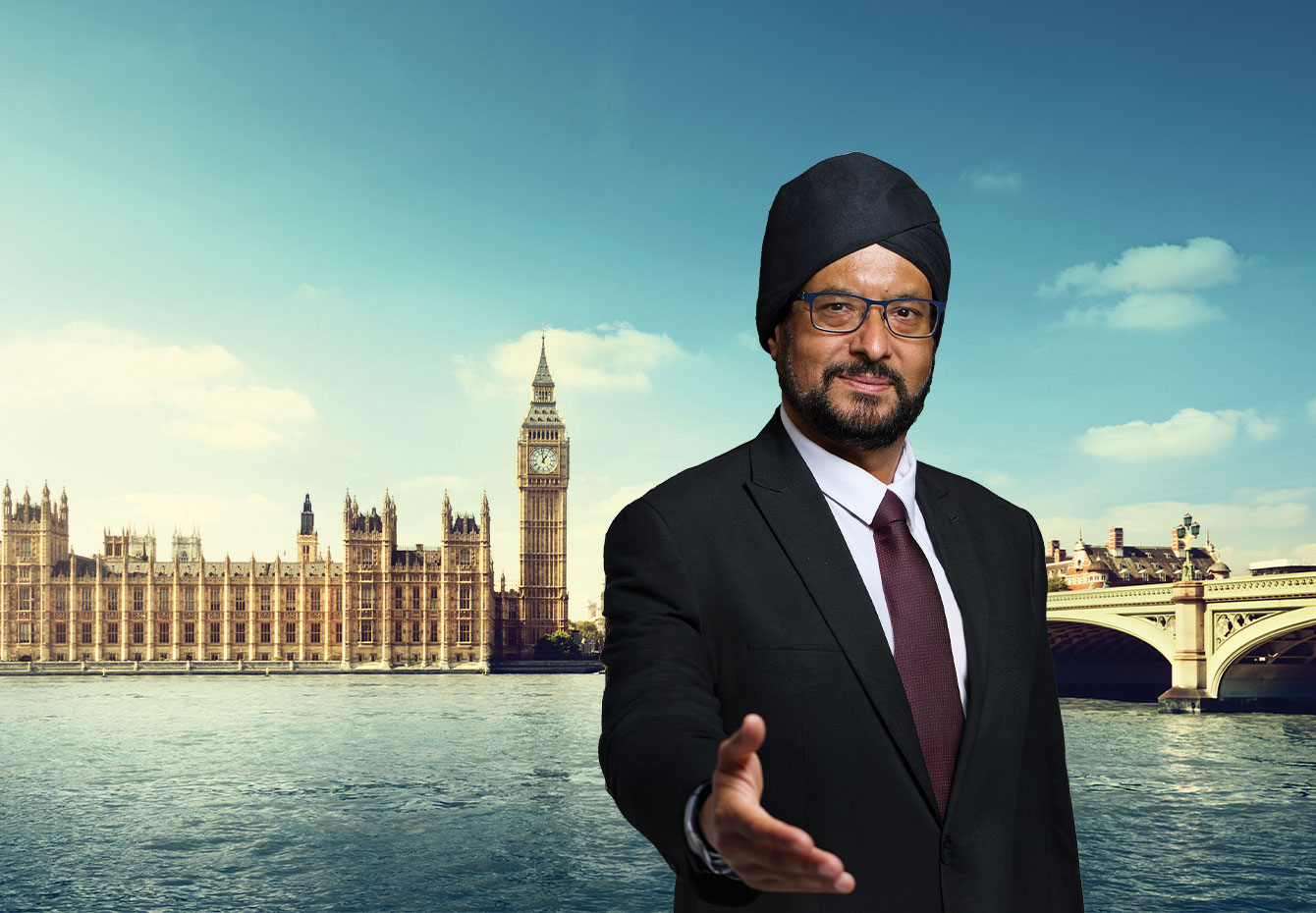
From Wolverhampton to Westminster
Warinder Juss MP is a shining example of how A-level results don’t necessarily define your future – the right university can open doors and unlock potential, acting as a catalyst for success.
The son of a railway station master in Jinja, Uganda, Warinder emigrated with his family to England when he was just four years old, as his parents wanted to give their children a better education than they believed the 1968 East African school system could provide.
Warinder explained: “When we first came to Wolverhampton, we moved in with my dad’s uncle on Red Cross Street near the Molineux (Wolverhampton Wanderers’ football stadium), and we then moved to rented accommodation nearby, where I shared a bedroom with my two brothers. We then moved to Heath Town, where we had a sweet shop, and I had good experiences there at Woden Road infants school and junior school.
“It was only when I went to the local comprehensive school that things started to go wrong.”
Unfortunately, as a Sikh who wore a turban in 1970s Britain – a time of ideological turmoil – Warinder faced discrimination from a young age and suffered both verbal and physical racism.
Warinder recalls walking through Wolverhampton town centre and having racial abuse hurled at him, and sometimes even needing to defend himself from attackers.
“Those were bad times,” he said. “I remember thinking that if I wanted to survive, I either needed to be fit and strong to be able to fight back, or very clever.
“I’ve always thought that discrimination is something that needs to be fought and challenged and that we need to have an equal society. Those early experiences influenced my thinking, and I saw the unfairness of being discriminated against just because of the colour of your skin and the way you look.”
Due to his troublesome time in comprehensive school, Warinder struggled to study. This was reflected in his grades in O-levels and A-levels, which didn’t demonstrate the intelligence he’d shown during his time at infant and junior school. However, despite his disappointing results, the University of Wolverhampton – then Wolverhampton Polytechnic – recognised Warinder’s potential and offered him a place.
“After the grades I got, I felt lucky to have been given a chance by Wolverhampton, because they offered me a place to study law,” Warinder said. “My brother also studied law at Wolverhampton, and he went on to do very well. He went to Cambridge University afterwards, became a professor of law, and he’s also a barrister and part-time judge.


“Whilst I was there, I came across people who had got much better A-levels than me, but I still felt capable and didn’t have an inferiority complex. I’d been given a chance to become a lawyer, and I was lucky to have that opportunity.”
Studying at Wolverhampton both introduced Warinder to politics via an optional module and taught him that his true passions were not in becoming a commercial lawyer, as he’d first thought, but in representing individuals who had been wronged.
Once he became qualified after gaining first-hand experience as a legal clerk at two local law firms, Warinder turned his attention towards Thompsons Solicitors, a law firm prioritising social justice.
Warinder said: “They worked to further the labour and trade union movement. They represented individuals who had been injured and wronged at work and pursued employment rights.
“I really enjoyed my time there. I worked as a solicitor for over 30 years, specialising in personal injury, clinical negligence, and work-related stress claims.”
During his time at Thompsons Solicitors, Warinder met and worked alongside Rob Marris, who subsequently became a Wolverhampton South West MP, and he encouraged Warinder to become a trade union and Labour Party activist. Warinder got involved in politics just before the 1997 General Election, when Tony Blair was elected as Prime Minister. He then started attending branch meetings and constituency meetings, going on to become a trade union liaison officer for the constituency Labour Party and Chair of the local branch.
“I was heavily involved with the trade union movement, becoming a member of the GMB Union,” he explained. “I joined the Union Race Advisory and Equalities Forums, regional committee and regional council, attended the TUC Black Workers’ Conference and other conferences, and eventually got elected on to the Executive Council of the GMB, of which I am still a member.”
Becoming close friends during their time at Thompsons Solicitors, Warinder admired Rob’s standing in the community, especially amongst religious groups. While Rob does not follow any religious faith and Warinder is a Sikh, they both see great value in creating and maintaining links with the religious communities in Wolverhampton.
He said: “Even now, we often go to a mosque together for Friday prayers and attend other religious events and festivals together. My own religion is a major influence on my work as an MP, because ‘seva’ (selfless service) is one of the biggest aspects of Sikhism. It is very important to Sikhs that we serve others without fear or favour.


“Challenging injustice and representing those that have been wronged, who are underprivileged or dispossessed, is part of my religion, but also ties in well with my work as a lawyer, and now as a Labour MP.”
Warinder was elected as an MP for the Wolverhampton West constituency in 2024. He is known to be a strong supporter of the NHS and community welfare, and a politician who is unafraid to speak out on issues that are close to his heart, such as when he broke ranks with the Labour leadership and called for an immediate ceasefire during the Gaza conflict in October 2023.
One particular area of political struggle Warinder sees, is a growing distrust in politics itself, and he’s expressed concern by the amount of hate, often racist, he regularly sees directed towards public servants such as himself.
“We need to deal with some of the far-right rhetoric we are experiencing,” he said. “Having grown up experiencing widespread, overt racism in the 70s, I used to go around saying that we’ve made improvements, but I worry that we’ve now gone backwards. There’s so much resentment towards immigrants and migrants, and even towards people who were born in this country but aren’t white.
“We need to restore a belief in the political system and restore trust. Get the message across to people that, as politicians, we are servants and here to serve the community.”
It’s a tough job, says Warinder, and he would have been happy remaining a lawyer if he hadn’t felt so driven to serve his constituents and do some good for his constituency where he also lives. His religion, beliefs and conscience have shaped him into a politician who feels passionate about combating mental health issues in young people, reforming special educational needs and disabilities (SEND) provision, and providing better routes into education and employment and away from knife crime, youth violence and re-offending. Warinder also sits on the Justice Select Committee at Parliament.
He considers being an MP to be a privilege and a noble pursuit, and has some clear advice for anyone considering pursuing a political career.
“I think it’s a very good idea to do a job outside of politics before entering politics as a career, because it’s important that you get to live in the ‘normal world’ first. Westminster is a bubble, and reality exists outside it.
“My second piece of advice is to be prepared to suffer a lot of criticism and negativity, so having a ‘thick skin’ is essential.
“And furthermore, it’s important to do the job for the right reasons. It’s a great responsibility and an honour, but it isn’t a status thing, and if you want money and status there are other jobs you can do. If you approach your duties as ways to serve people and to do some good, then I think it’s a great job and I would recommend it.”
From Uganda to Wolverhampton, Warinder’s life and career tell a story of aspiration, determination, resilience and success through hardship, and he remains committed to serving his community and beyond.


