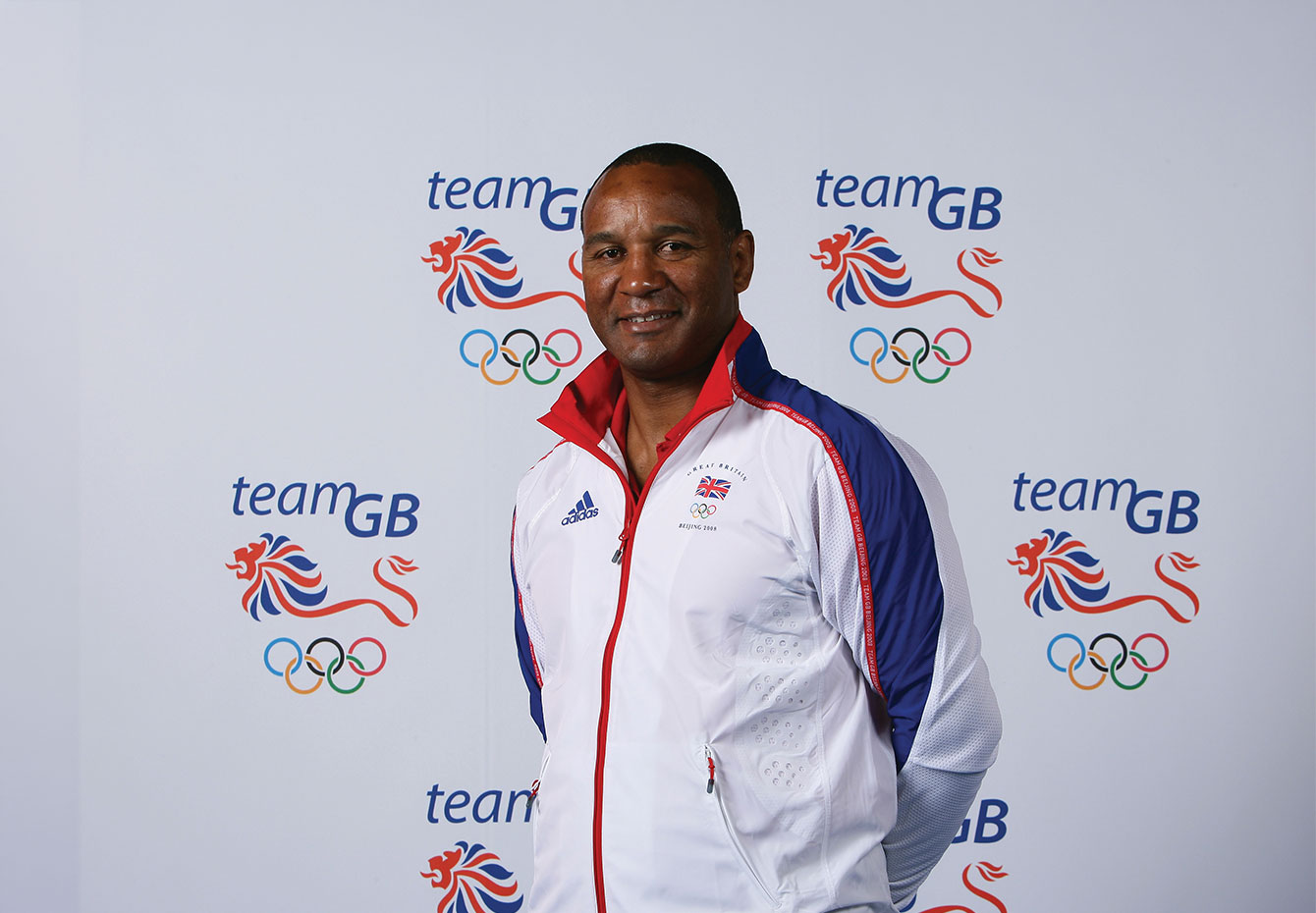
From Olympian to CEO
Medal-scooping ex-Olympian Densign White MBE may have retired from judo competitions, but he remains as busy as ever.
Following his career as a renowned judoka, the 64-year-old is the CEO of the International MMA Federation, where he helps lead mixed martial arts towards greater sporting recognition.
“I got to see the whole country because there was always a competition happening somewhere.”
“I was always the first person who the PE teachers asked to represent the school at athletics, football, rugby, cross-country running – you know, anything,” Densign said, commenting on the roots of his lifelong love of sport. “I took to judo straight away, though. I loved the combative side and the discipline. When I started doing judo, I dropped all those other sports because I began competing practically every weekend.
“With other sports, you could play a whole season and if the team didn’t do well, you’d get nothing. With judo, if I did well in one single event, I came away with a medal. That really motivated me, and I got to see the whole country because there was always a competition happening somewhere.”
Densign’s judo coach recognised his Olympic potential at 16, and by 18 he was instructing and a reserve for the 1980 Moscow Olympics.
“There was no looking back,” he said. “Before I was sponsored, I was working part-time for Wolverhampton Borough Council as a judo instructor, doing basically the same thing as my coach. It meant I was earning a bit of money and had a job where the bosses were sympathetic to me travelling to camps and international competitions.
“When I got sponsored by the Colin Draycott group, it allowed me to train full-time.”
Densign competed in various international judo events including the Dutch, US, and French opens. His first world championship was in 1981, but then while he was training for the next world championship in 1983, he ruptured his Achilles tendon just two weeks before the event. The injury was so disruptive that he almost missed the Los Angeles Olympics in 1984, but due to the work of an eminent surgeon and physiotherapist at Charing Cross Hospital, as well as complementary work from the physiotherapist at Wolverhampton’s Molineux Stadium, Densign was back training again within three months.


“I was really proud to compete in the Olympics, and it was what our coach had always been pushing and driving us towards. It’s the pinnacle,” he said.
“Our coach always said that if you win an Olympic medal, you’ll be made for life. Although that was partially true for me, it wasn’t completely. Judo is not as big as some of the disciplines – we're often called a ‘Cinderella Sport’, because it gets overlooked – so we don’t get the same attention as the bigger Olympic sports.”
Despite later winning a gold medal at the Commonwealth Games in 1990, which Densign describes as ‘an amazing experience', plus two silvers and a bronze in the European Championships, he is most proud of the bronze he won in the Essen World Championships in 1987.
“That was when I felt that I’d made it,” he said. “I was on the world level, on the podium, and for one of my best competition performances. The Commonwealth Games was great, but it’s not on the same level as a world championship.”
Judo didn’t just give Densign a career – without reaching the top of his chosen sport, he would never have met his future wife, who is a legend in her own right: British javelin thrower and Olympic gold medallist, Tessa Sanderson CBE.


Photo Credit: Doug Peters, Alamy.
The pair first met at the LA Olympics.
“I met her in the dining room,” Densign said. “The judo team had a disappointing day because Neil Adams, who was the star of the team, was expected to win the gold medal but he lost the final. When I saw Tessa, I asked how she’d got on, and she said, ‘I won.’
“I said to her, ‘Get out of here!’ I didn’t believe her, and she was a bit upset by that, I think.”
Having adopted twins in 2013 and having celebrated their 16th wedding anniversary in May 2026, thankfully they overcame their rocky introduction.
Despite Densign’s success in the judo world, he became despondent after missing out on a medal in the 1984 Olympics and then finishing 5th in the Seoul Korea Olympics in 1988.
“I got a bit down and depressed,” he said. “The disappointment was great, so I took a break from judo for some time out.
“I looked for a job and went to an interview at a place in Wolverhampton called The Crypt (a young people’s centre). The director asked, ‘Why should I give you the job? I’ve got applicants who are better qualified and with more experience, so it’s great that you’ve done the Olympics, but what else do you bring to the table?’
“I didn’t get the job, and it made me realise that I needed to consider my future. If I continued doing judo, however long that career might be, what would I do afterwards?”
Following a period of soul-searching, Densign studied a politics and psychology degree at the University of Wolverhampton, from which he graduated in 1993. “I was always interested in politics,” Densign said. “I was attending British Judo Association General Assemblies, unlike most young athletes, and I enjoyed listening to people’s grievances about the way the organisation was being managed.
“I was a bit of a rebel: I used to complain about the way we were treated and the lack of resources we had to help us reach the level we wanted, compared to other countries we were competing against. I felt like, if I ever had the opportunity, I wanted to change that.”
Densign said that his politics degree at Wolverhampton influenced his decision to become Chair of British Judo in 2001 and served for 11 years in the role. In parallel he joined Sporting Equals, which promotes inclusivity, diversity, and equality in sport, offering opportunities to people who wouldn’t normally have easy access to them due to language or religious barriers.
“It was a chance meeting with the guys from Sporting Equals, as I was invited to one of their events at Twickenham, the rugby location,” he said. “They were doing a seminar there, I got to meet the team, and they invited me to join the board of trustees. I spent a few years doing that, then when the chair stepped down (Brendan Batson – West Bromwich FC Legend), I was asked if I’d be interested in taking the chair, so I agreed.
“We do a lot of advocacy work for people who have had issues with racism. We’ve represented some high-profile athletes, like the cricketer from Yorkshire Azeem Rafiq, as well as rugby players, track and field people, and more.


elected chair of Rugby Union,
Mr Tom Ilube CBE.
“We’ve made representations to the government, had events at the House of Lords, and have an annual event called the Sporting Equals Awards, which not only recognises the work of people at the elite level, but also the people working at a grassroots level who get very little support or recognition.”
Densign’s work with Sporting Equals is the primary reason he received an MBE in 2020, for services to diversity in sport.
“It was a surprise – I didn’t expect it,” Densign said. “It was a great day when I received it, as I went with my mother to Windsor Castle and my medal was presented to me by Princess Anne.”
Densign has now retired from judo but stays active through cycling – especially off-road mountain biking – and occasional skiing.
Professionally, he is the CEO of the International MMA Federation (IMMAF) after the organisation reached out to him. If judo is a Cinderella sport, then perhaps mixed martial arts is a Frankenstein sport, outcasted as it is by the sporting community due to its brutal reputation. While MMA is still outlawed in some territories, Densign is determined to bring recognition and respect to the practice.
“The IMMAF is an international federation representing 130+ organisations around the world,” Densign said. “We organise international events, world championships, European championships, Asian championships, and Pan-American championships. We’re developing coach certification, too, which has never existed before in MMA.
“We’re doing refereeing and safeguarding certifications, coaching certifications, and all the safeguarding stuff, putting together policies and procedures. We’re also trying to apply to be part of the Olympic family.”
While Densign thinks that they are still long years away from MMA featuring in the Olympics, he says that the first stage to strive for is Olympic recognition.
“One of the objections to MMA being recognised within the global sports community is that MMA is still perceived to be entertainment or a show rather a real sport that meets Olympic values,” Densign said. “Regarding events such as the Jake Paul MMA debut on Netflix, for example, I worry about the risk of serious injury to participants who aren’t fully trained or experienced enough.
“All it takes is one tragic incident for authorities to start banning the sport and driving it underground without regulation.”
Densign’s hands remain full in both the professional world and his own personal life, and it’s clear that this is just the way he likes it. Post-athletic career, he continues to dedicate himself to sporting excellence on a global scale.
In closing, when asked how he feels in his new role, Densign said: “It’s always good to move on and start a new chapter in your life. I try not to look backwards. I’d rather look forwards, like: what’s next?”


