8 min read

A voice for the Amazon’s future

If you ask Marcel do Nascimento Botelho where his story begins, he won’t point to a ministerial office, a diplomatic meeting, or a global climate summit. He’ll take you instead to the Amazon countryside, to a family where agronomy (the science and technology of crop production to improve yield and sustainability) was almost a second language, and to a childhood shaped by curiosity, discipline and an unshakeable desire to move forward.

Today, Marcel is one of Brazil’s most influential voices in sustainable development, education and science policy. As president of FAPESPA (the Pará State research support foundation: Fundação de Amparo à Pesquisa do Estado do Pará) and vice-president of Brazil’s National Council of State Research Foundations, he helps shape national research agendas on bioeconomy, forest recovery and rural livelihoods. His work reaches from remote river communities to international negotiating tables – and back again.

It is a journey that began early. Very early.

“I was in school at three years old,” Marcel laughs. With teenage parents juggling work and study, his grandmother would walk him to school. By five, he could already read and write – but was held back a year simply because he was too young to move up a class. It felt like a failure and is a moment that stayed with him. “I don’t like to stand still,” he says. “I like to move forward, to understand what’s happening – and then improve it.”

That instinct to understand systems, and to change them for the better, runs through his entire career.

Rooted in the Amazon

Marcel comes from an agronomist family – eight close relatives followed the same path. Studying agronomy at what would later become the Federal Rural University of Amazonia (UFRA) felt natural. From there, he moved to southern Brazil to complete a Master’s degree in plant physiology, focusing on how plants survive stress: droughts, floods, low light, scarce nutrients.

Even now, the relevance of that work is striking. “When environments change,” he explains, “plants that once thrived there may no longer survive. Understanding adaptation is essential – especially with climate change.” That scientific grounding led him back to UFRA as a lecturer, teaching chemistry, biochemistry and plant physiology. But alongside the lab and lecture hall, Marcel was becoming increasingly interested in something else: institutions, leadership and how change really happens.

Wolverhampton and a change of direction

The turning point came in the early 2000s, through an institutional strengthening project between the University of Wolverhampton’s Centre for International Development and Training (CIDT), Harper Adams University and UFRA. At the time, UFRA had not yet achieved full university status. Marcel became deeply involved in the administrative side of the collaboration – and caught the attention of Wolverhampton academics, including Professor Robert Kowalski.

In 2003, Marcel moved to the UK to begin his PhD at the University of Wolverhampton. It was more than a change of country; it was a shift in perspective.

“I moved from agronomy into management, institutional development and local growth,” he says. His doctoral research focused on his own university, examining how organisations change, and – crucially – what motivates people to embrace change even when it feels uncomfortable.

Those ideas would shape everything that followed. Marcel remembers Wolverhampton warmly – not just for the academic rigour, but for the openness of ideas and the international mindset. In 2024, the University recognised his journey with its Distinguished Alumni Award – Changemaker, a title he wears proudly. “Changemaker defines me,” he says. “If you don’t challenge systems, you keep repeating the same patterns.”

Leading transformation in higher education

Returning to Brazil, Marcel combined research with leadership roles at UFRA: course coordinator, institute director, and Pro-Rector for Teaching. By 2017, supported by the university community, he was elected Rector – leading the same institution where both he and his father had studied.

Marcel as a child (bottom Right) with his parents.

It was, by his own admission, a moment of deep personal and professional pride: “Everybody in my family had graduated from the same university – so you can imagine the huge party that we had to celebrate!”

As Rector, Marcel led a sweeping transformation. Curricula were reformed, student evaluation systems modernised, and postgraduate education significantly strengthened. UFRA’s master’s and doctoral programmes began to earn national and international recognition, with students winning awards and the university climbing national rankings.

By the end of his tenure, UFRA had become the leading university in Pará and across the Brazilian Amazon.

Equally important was the university’s outreach. Extension activities – getting research out of classrooms and into communities – grew by more than 300%. Knowledge was no longer confined to campuses; it was flowing into fisheries, agriculture, rural innovation and environmental management across the region.

Science under pressure: Covid-19 in the Amazon

One of the defining chapters in Marcel’s leadership came during the Covid-19 pandemic. Working with interdisciplinary teams, he helped deploy artificial intelligence and big data to predict infection patterns and hospital demand across Pará State.

The results were extraordinary. Evidence-based planning helped reduce Covid-related mortality by an estimated 45% in Pará. Marcel is clear-eyed about the stakes: if those approaches had been adopted nationwide, Brazil could have lost up to 180,000 fewer lives.

“It was a time of uncertainty and hardship, in which only science could offer guidance on how to navigate such an unknown situation” he recalls, “despite the pain experienced, it is now also a source of great pride.”

That work caught the attention of state leadership. In 2021, Marcel was invited by the Governor to lead FAPESPA – the State Research Support Foundation – placing him at the heart of Pará’s science and innovation strategy.

Shaping a bioeconomy for the future

At FAPESPA, Marcel now oversees investment in Master’s, doctoral and postdoctoral training across the entire state, expanding research capacity far beyond the capital. Pará has emerged as a national leader in Amazonian research, particularly in the bioeconomy.

Marcel, grown up, with his parents.

For Marcel, this is central to the future of the forest.

“Protecting the Amazon isn’t just about stopping deforestation,” he explains. “It’s about creating value while keeping the forest standing.”

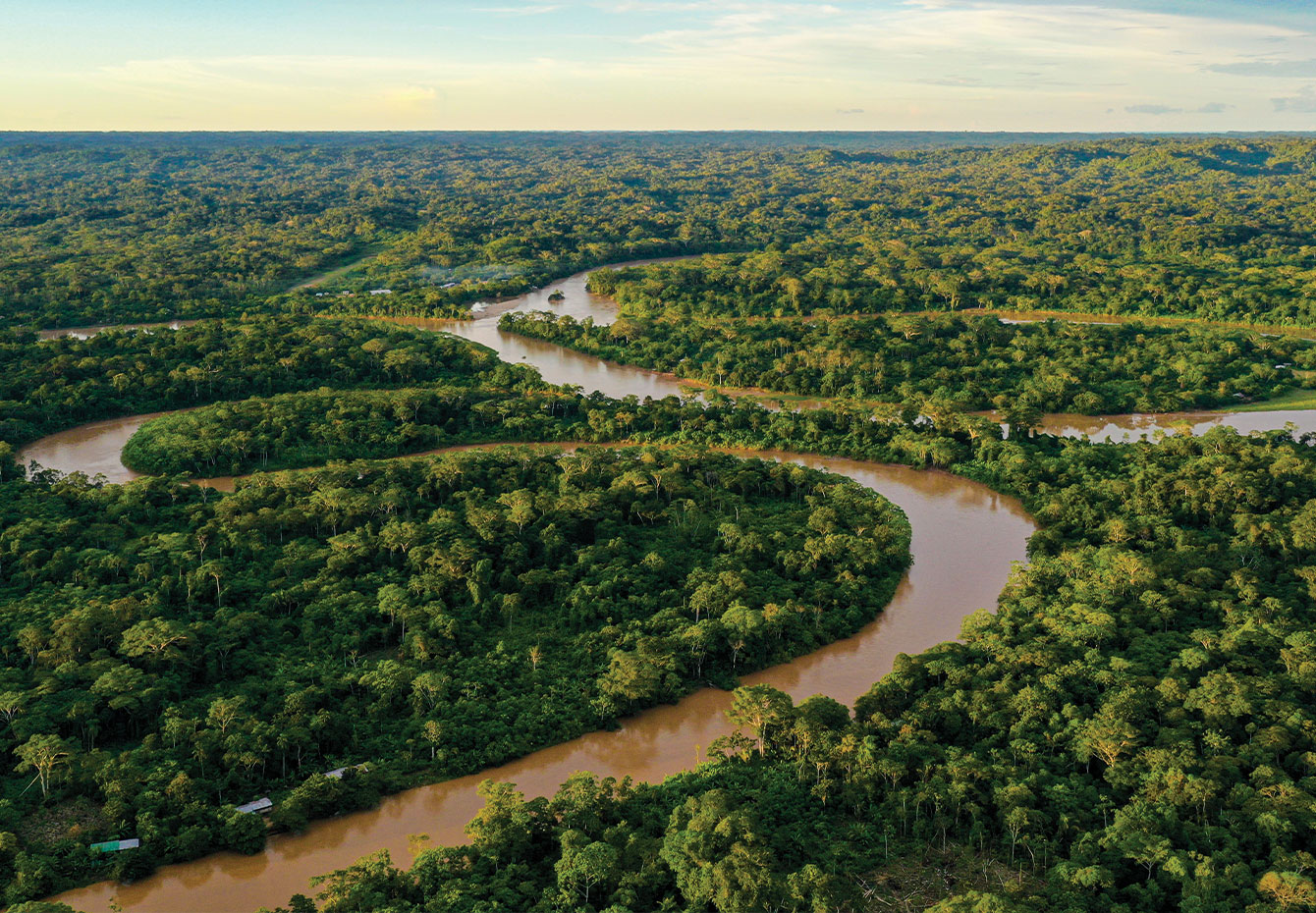
Traditional development models rely on clearing forests for agriculture and livestock. Pará is trying something different – building an economy based on biodiversity, science and technology. That means developing new products, supply chains and livelihoods rooted in forest resources, rather than their destruction.

It also means working closely with indigenous and remote communities. Marcel speaks candidly about the challenges: balancing modern technologies with centuries-old ways of life, respecting cultural history while addressing urgent threats like flooding and food insecurity.

“Sometimes solutions sound simple – like building homes on stilts to avoid floods,” he says. “But everything has cultural meaning. You have to listen.”

Another challenge is knowledge itself. Many communities rely on oral traditions, with little written record-keeping. Climate change threatens not only land and livelihoods, but memory. “When elders are lost, knowledge can be lost forever,” Marcel notes. Protecting culture, he believes, is as important as protecting ecosystems.

From the Amazon to the world stage

Marcel’s influence now extends far beyond Brazil. As vice-president of Brazil’s National Council of State Research Foundations, he represents all 27 state agencies, helping align national priorities and international partnerships. His work has drawn global attention – contributing to Belém being chosen to host COP30, placing the Amazon firmly at the centre of global climate talks.

He is also in the final stages of appointment as Honorary Diplomatic Consul linked to the UK, strengthening scientific and cultural ties between Brazil and Britain. He remains closely connected to the University of Wolverhampton through CIDT, exploring new cross-country collaborations that support both the University’s mission and Pará’s development vision.

A life of purpose and progress

Asked what comes next, Marcel doesn’t talk about titles. He talks about people, systems and futures.

“I hope to keep contributing – to science, to education, to better lives,” he says. “We are changing environments, communities, and opportunities. That responsibility is huge – but it’s also a privilege.”

From a three-year-old in a classroom to a global leader in climate justice, Marcel do Nascimento Botelho’s story is one of mobility, curiosity and courage. It is proof that research, when rooted in place and purpose, can change not just institutions – but the world they serve.

Marcel visiting his alma mater.

“What sets Marcel apart is not only the scale of his achievements, but his commitment to collaboration. From strengthening UFRA’s role in the Amazon to leading life-saving research during COVID-19, his impact is profound. As an alumnus, his continued engagement with CIDT and the wider university represents a lasting partnership – one that actively benefits both institutions and future generations.

Of course, some things about Marcel have not changed since we were students together in 2003 – his love of a good barbeque and Wolves football club!”

Ella Haruna
Marcel’s fellow alumna, now Associate Professor of Development Cooperation and Head of Centre for International Development and Training.